AI search & GEO
Get recommended by AI, not just ranked by Google
A growing share of Denver buyers now ask an assistant before they open a search results page. 'Who's a good roofer in Denver?' or 'What should a small business website cost in Colorado?' gets answered in a paragraph that names two or three businesses. If you are not one of them, the click never existed.
Generative engine optimization — GEO — is the work of becoming the business those systems can confidently name. It is not a trick and there is no submission form. It comes down to being easy to verify, easy to parse and easy to quote.
We treat it as part of SEO rather than a luxury add-on, because the underlying work makes you rank better in normal search anyway. Structured data, consistent business facts, direct answers near the top of every page, and genuine third-party mentions help both systems at once.
What we will not do is promise placement. Nobody can. What we will do is build the foundation, track which assistants mention you month over month, and show you the change in plain language.
- LocalBusiness, Service and FAQ structured data
- Answer-first page formatting AI can quote
- Consistent business facts across the web
- Question-based content built from real searches
- Monthly mention tracking across assistants
- Included from the base SEO tier, no contract
How AI systems decide who to name
These models do not rank pages the way a search engine does. They assemble an answer from sources they consider reliable and easy to interpret, then name specific businesses when the question calls for one. Three things push you into that set.
First, verifiability. If your name, address, phone and hours match everywhere — your site, your Google Business Profile, directories, your social accounts — the model can treat those facts as settled. If your phone number appears three different ways across the web, it hedges and names somebody else.
Second, structure. Marked-up data tells a machine exactly what your business is, what services it provides, where it operates and what it charges. Unmarked prose leaves it guessing. This is the cheapest and most neglected part of the work.
Third, quotability. Models favor content that states an answer plainly. A page that says 'Local SEO in Denver typically costs $750 to $2,500 per month' can be quoted. A page that says 'pricing varies depending on your unique needs — contact us for a custom quote' cannot be, and so it never gets cited.
Answer-first writing
The traditional SEO article opens with three paragraphs of throat-clearing before it gets to the point. That format was built to keep humans scrolling past ads. It is exactly wrong for AI visibility.
We restructure pages so the direct answer sits in the first two sentences under the heading, followed by the detail, the caveats and the context. A question becomes an H2, the answer follows immediately, and the supporting explanation comes after. That format reads better for people in a hurry and gives a model a clean block to lift.
We also insist on specifics. Ranges, timeframes, real numbers, named neighborhoods, actual process steps. Vague marketing language is invisible to these systems because there is nothing in it worth quoting.
Structured data done properly
Every page we manage carries the markup that applies to it: LocalBusiness with address, hours, geo coordinates and service area; Service markup on each service page; FAQPage where there are genuine questions; BreadcrumbList so the site hierarchy is machine-readable; Article markup on posts with real dates and a named author.
It has to be accurate, not aspirational. Marking up reviews you do not have or hours you do not keep gets the markup ignored and can trigger a manual penalty. We only mark up what is true and visible on the page.
This is a one-time build plus maintenance, and it is usually finished in the first two weeks of an engagement. It is also the single highest-leverage thing most Denver small business sites are missing.
Third-party mentions matter more than links here
Traditional SEO chases links. AI systems weight mentions — being written about, listed, reviewed and discussed in places they already trust. A paragraph about your business in a local roundup, an active profile on a real directory, reviews that describe specific work, a quote in a trade publication.
So part of the program is unglamorous placement work: claiming and completing the directory profiles that matter in your category, getting reviews that use natural service language, and finding two or three realistic opportunities a quarter to be mentioned somewhere credible.
We are honest about pace. This part is slow and it compounds. A business starting from zero should expect the first meaningful shift somewhere between month four and month eight, not month two.
Measuring something that has no rank tracker
There is no official position report for AI answers, so we build our own baseline. We define the twenty to thirty questions a real customer would ask an assistant before hiring you, run them across the major assistants each month, and record whether you are named, how you are described, and who is named alongside you.
That produces a simple trend: month one you were named in 2 of 28 prompts, month five you were named in 11. It also surfaces something rank tracking never shows — how the AI describes you. If three assistants describe your company as 'a budget option,' that is a positioning problem worth fixing.
We combine it with the normal metrics that still pay the bills: map pack positions, organic traffic, calls and form leads. AI visibility is an addition to the scoreboard, not a replacement for it.
Honest expectations
AI search is real and growing, but for most Denver small businesses it is still a minority of inbound compared with Google Maps and organic search. Any agency selling GEO as an emergency is selling urgency, not strategy.
The reason to do it now is that the work is the same work that improves your ordinary rankings, and the businesses that build the foundation early are the ones already in the answer set when volume shifts. It costs very little extra on top of good SEO — which is exactly why we stopped restricting it to our top package.
Common questions
- What is generative engine optimization (GEO)?
- GEO is the work of getting your business named inside AI-generated answers — Google AI Overviews, ChatGPT, Perplexity and Gemini — rather than only in the traditional list of blue links. It relies on structured data, consistent business details and clearly written pages that answer questions directly.
- Is AI search optimization different from regular SEO?
- It overlaps heavily but not completely. Regular SEO is about ranking a page; GEO is about being the source a model quotes. The extra work is structured data, direct answer formatting, third-party mentions, and consistency of your facts across the web.
- Can you guarantee my business appears in AI Overviews?
- No, and neither can anyone else. These systems change weekly and do not publish ranking rules. What we can do is make your business the easiest one to quote and track whether mentions increase over time.
- Do I need a $2,500 package to get this?
- No. AI search work is now part of every SEO engagement we run, starting at the base tier. The larger package adds monitoring across multiple assistants and a bigger content program.
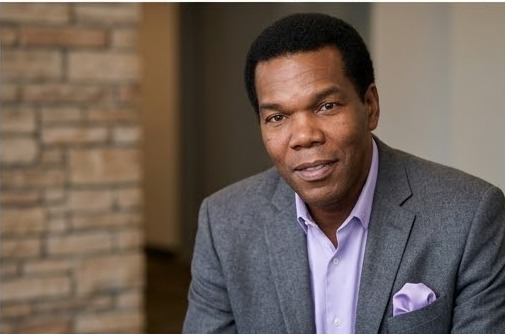
Call Ralph Simpson at 720-676-5646 for a free check of how AI assistants currently describe your business — he'll run the prompts and send you what comes back.